
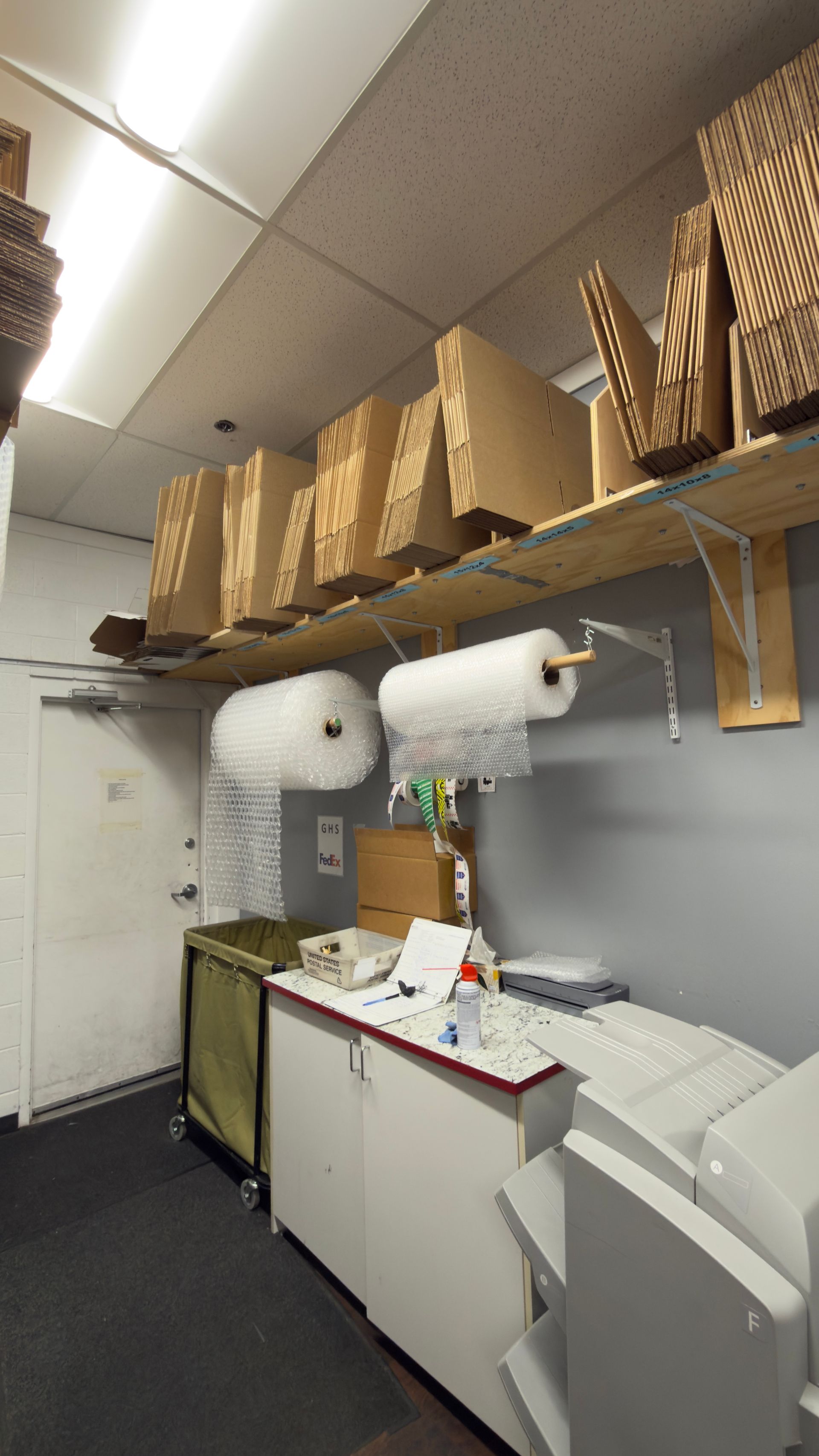
Preventing Damage Before Transit Starts
Professional Packing in Boise for Fragile, Oversized, and Valuable Items Requiring Custom Protection
Electronics shift inside boxes during transport, glass items crack against hard surfaces, and artwork sustains edge damage when packaging materials compress under weight—failures that occur because standard boxes and loose fill don't immobilize contents adequately. Professional packing eliminates movement by using layered cushioning, custom box sizing, and bracing techniques that keep items stationary regardless of how carriers handle packages. After proper packing, fragile contents arrive intact because they never contact box walls or each other during the vibration and impacts of truck transport.
The process involves selecting box dimensions that minimize excess space, wrapping individual items in protective materials suited to their fragility, and filling voids with foam inserts or air pillows that prevent shifting. High-quality packing materials—thicker corrugated cardboard, corner protectors, and bubble wrap with larger cells—absorb impacts better than repurposed boxes or newsprint. 208 Properties applies professional packing techniques in Boise for items that standard packaging methods leave vulnerable, including electronics with screens, antiques with delicate finishes, and oversized items requiring double-walled boxes.
Schedule a packing consultation to review materials and methods suited to your specific items.
How Proper Packing Prevents Common Failures
Custom packing addresses the specific vulnerabilities of each item type—screens need rigid protection against surface pressure, glassware requires separation to prevent contact, and heavy items need reinforced box bottoms to prevent breakthrough. Corner protectors distribute impact forces away from edges, while foam inserts create compartments that isolate fragile components. Using appropriately rated boxes ensures walls don't buckle when packages are stacked in delivery trucks, which matters because carriers routinely place lighter parcels beneath heavier ones.
Once packing is complete, items withstand the drops, tosses, and conveyor impacts that occur during standard carrier handling. You avoid the frustration of receiving boxes that show exterior damage or finding that contents broke despite your best packing attempts. Insurance claims become less necessary because proper packing prevents the damage that triggers claims in the first place, and carriers view professionally packed items as lower-risk when evaluating liability for handling errors.
Professional packing saves time compared to researching packing techniques, sourcing specialty materials, and testing whether your approach actually immobilizes contents. The service particularly suits situations where item value justifies the packing cost—artwork purchased at auctions, antique furniture sold to distant buyers, or electronics being returned for warranty service. For items that cannot be replaced or repaired affordably, expert packing reduces shipping stress by ensuring protection meets the level of risk involved.
What Property Owners Usually Ask
Clients preparing specialty items for shipment often ask about material selection, cost factors, and what qualifies as requiring professional packing versus standard methods.
What makes professional packing different from using store-bought boxes and bubble wrap?
Professional packing uses materials rated for specific weight and fragility levels, with techniques like double-boxing, corner bracing, and void elimination that prevent movement. Store-bought supplies often lack adequate crush resistance or cushioning depth for truly fragile items.
How are oversized or irregularly shaped items packed securely?
Custom crating or multi-piece box assemblies create enclosures sized to minimize excess space while providing adequate wall clearance. Internal bracing keeps items centered, and external banding reinforces boxes against splitting under their own weight during handling.
Why does packing quality matter more for long-distance or multi-carrier shipments?
Longer transit times mean more handling events—transfers between trucks, sorting facility conveyor drops, and stacking under other parcels. Each event multiplies the chance of impact or compression, so packing must withstand cumulative stress rather than a single delivery trip.
What items are most commonly damaged due to inadequate packing?
Flat-screen monitors crack when boxes flex, glassware shatters when pieces contact each other, and electronics with moving parts—like hard drives—fail when subjected to vibration without foam isolation. Antiques with protruding features break when pressure isn't distributed across stronger structural areas.
How does professional packing in Boise help with carrier insurance claims if damage does occur?
Properly documented professional packing demonstrates that damage resulted from carrier mishandling rather than inadequate preparation, which strengthens claims. Carriers are more likely to accept liability when packing methods meet industry standards and materials are rated appropriately.
208 Properties provides custom packing solutions using high-quality materials designed for the specific vulnerabilities of your items. Bring electronics, artwork, antiques, or specialty goods requiring protection beyond standard packing methods.